UX research: understand before designing.
UX research helps teams make evidence-based decisions: understand users, align stakeholders, identify friction points and turn learnings into concrete product actions.
UX research helps teams make evidence-based decisions: understand users, align stakeholders, identify friction points and turn learnings into concrete product actions.
Before producing screens, you need to understand the context: who uses the service, which tasks must be completed, which constraints weigh on the project and which decisions need to be secured.
Based in Brussels, in Wallonia and remotely, I structure this user research phase, collect the useful signals and restore them in a form directly usable by product, design, business and development teams.
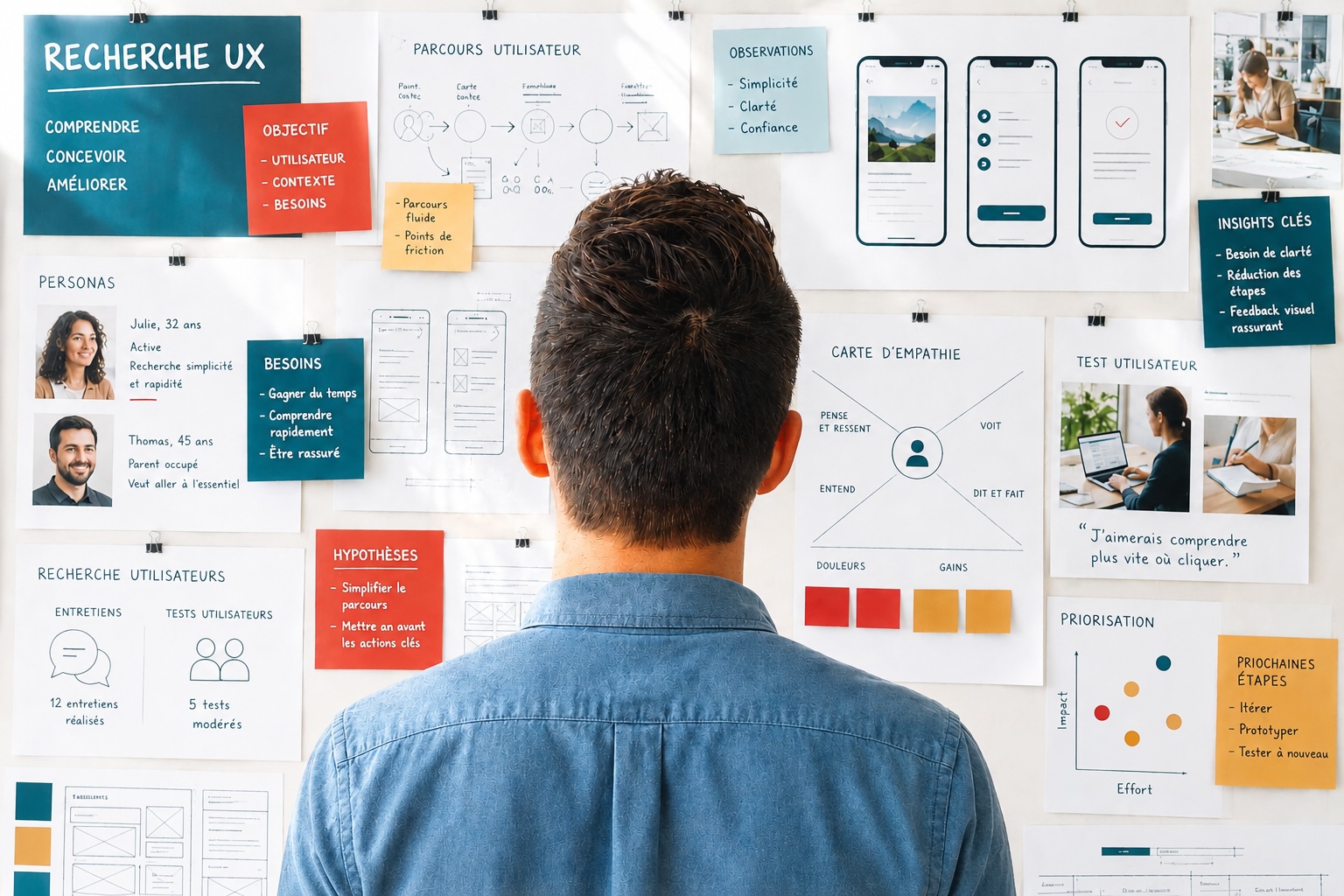
Research can frame a new initiative, inform a redesign, explain a conversion issue, prepare user testing or align several teams around the same understanding of the need.
Clarify objectives, assumptions, target audiences, business constraints and research questions before design starts.
Run user interviews, stakeholder interviews, framing workshops and observations to understand usage and friction points.
Set up surveys, analyse user feedback, read the available analytics signals and prioritise the detected issues.
Depending on the context, I combine the most relevant UX research methods to avoid decorative research and support useful decisions.
Understand the needs, expectations, blockers, vocabulary, habits and decision criteria of end users.
Gather business objectives, operational constraints, project risks and sometimes diverging internal visions.
Collect signals at a larger scale, validate trends and complement the qualitative learnings.
Formalise user flows, user journeys, journey maps, touchpoints and critical steps of a service.
Synthesise profiles, motivations, barriers and needs to help teams design for real situations.
Across my missions, I have conducted user interviews, interviewed the various stakeholders of a project, set up surveys and turned these learnings into decision-support material.
These engagements produced user flows, personas, user journeys, insight synthesis, UX recommendations, problem prioritisation and framing elements for the rest of the design work.
User flows, target journeys, usage scenarios and friction points to make visible the steps to simplify or secure.
Personas, interview synthesis, key learnings and recommendations to align teams on the real user needs.
The format can be short or integrated into a larger UX mission. What matters is framing what needs to be learned, then restoring the results in language that is useful to teams.
Define the objectives, assumptions, audiences to interview and questions to document.
Run the interviews, surveys, observations or analyses needed according to the project context.
Group the learnings, identify recurring patterns and separate facts from interpretations.
Produce the useful assets: personas, user flows, journey maps, prioritisation or UX recommendations.
Share the results with teams and translate research into design decisions or a prioritised backlog.